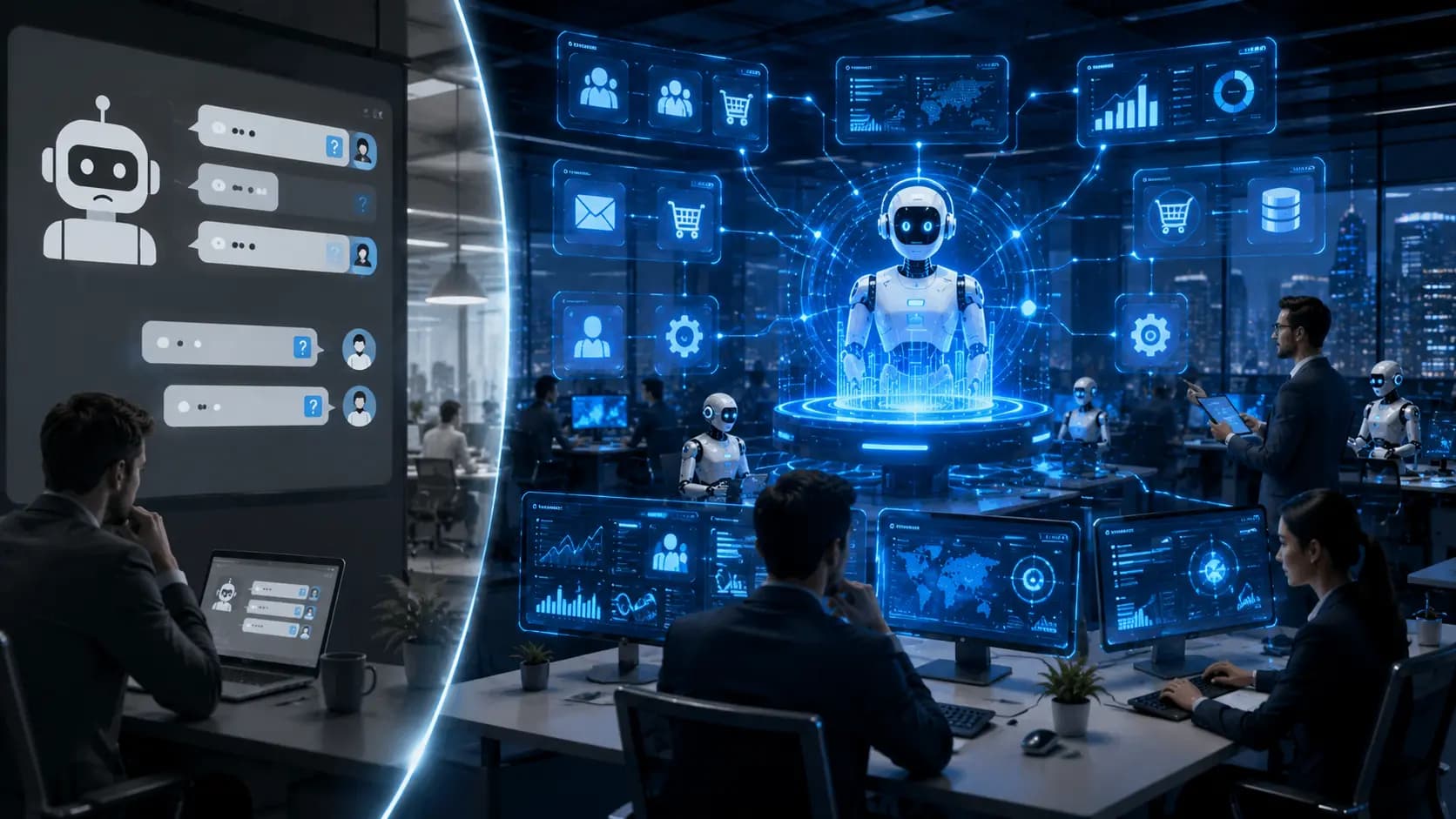
Artificial Intelligence has changed the way businesses interact with customers, automate operations, and improve productivity. For years, chatbots have been one of the most popular AI-powered tools, helping companies answer customer questions and reduce support workloads. However, as AI technology continues to evolve, businesses are now shifting toward a more intelligent solution—AI agents.
Unlike traditional chatbots that follow predefined scripts, AI agents can understand context, make decisions, complete multi-step tasks, and even collaborate with other systems. This new generation of intelligent software is helping organizations automate complex workflows that previously required human involvement.
If you’ve been exploring business automation, you’ve likely come across terms such as Custom AI Agents, Autonomous AI Agents, and AI Agent Development Company. But what do these terms actually mean, and how are they different from the chatbots many businesses already use?
In this guide, we’ll compare AI agents and traditional chatbots, explain how they work, highlight their strengths and limitations, and help you determine which solution is right for your business in 2026.
Understanding Traditional Chatbots
Traditional chatbots have been around for many years. They are designed to simulate conversations with users by following predefined rules, keyword matching, or scripted decision trees.
For example, if a customer types:
“Where is my order?”
A chatbot searches for matching keywords and returns a pre-programmed response or asks the customer to choose from a list of options.
These systems work well for handling repetitive customer service requests but often struggle when conversations become more complex.
Common Features of Traditional Chatbots
- Rule-based conversations
- Keyword matching
- FAQ automation
- Basic customer support
- Appointment booking
- Lead collection
- Limited personalization
Because traditional chatbots rely heavily on predefined logic, they can only answer questions they have been specifically programmed to handle.
What Are AI Agents?

AI agents are a much more advanced form of business automation.
Instead of simply responding to messages, AI agents can understand objectives, analyze data, make decisions, and perform actions across multiple business systems.
Think of an AI agent as a digital team member rather than a virtual FAQ assistant.
For example, imagine a customer asks:
“I want to upgrade my subscription and update my billing information.”
A traditional chatbot might provide links to support articles or transfer the conversation to a human representative.
An AI agent can:
- Verify the customer’s identity
- Retrieve account information
- Recommend the most suitable plan
- Update billing details
- Process the subscription upgrade
- Send confirmation emails
- Update the CRM
- Notify the finance team if necessary
All of these actions happen within a single workflow.
This is why businesses are increasingly investing in Custom AI Agents that automate complete business processes instead of individual conversations.
AI Agents Think Beyond Conversations
One of the biggest misconceptions is that AI agents are simply “smarter chatbots.”
They’re not.
Traditional chatbots focus on conversations.
AI agents focus on achieving goals.
For example, suppose a sales manager asks:
“Find our highest-value leads from the last 30 days and schedule meetings with those who haven’t been contacted.”
A chatbot cannot perform this task.
An AI agent can:
- Access the CRM
- Analyze customer data
- Identify qualified prospects
- Check calendar availability
- Send meeting invitations
- Notify the sales team
- Update records automatically
Instead of answering one question, the AI agent completes an entire business workflow.
How AI Agents Work
Modern AI agents combine several advanced technologies into one intelligent system.
These typically include:
Large Language Models (LLMs)
These models allow AI agents to understand natural language, interpret intent, and communicate in a human-like way.
Business System Integrations
AI agents connect with:
- CRM software
- ERP systems
- Accounting platforms
- Email tools
- Cloud databases
- Customer support platforms
- Marketing automation software
Memory
Unlike many traditional chatbots, AI agents remember previous interactions and use context to provide more relevant responses.
Reasoning
Instead of following rigid rules, AI agents evaluate multiple options before deciding what action to take.
Automation
They don’t just generate responses—they execute tasks.
This ability makes Autonomous AI Agents especially valuable for enterprises that want to automate repetitive operations without sacrificing accuracy.
Traditional Chatbots: Strengths and Limitations
Traditional chatbots still provide value in many situations.
Advantages
- Easy to implement
- Lower development costs
- Great for FAQs
- Suitable for small businesses
- Quick customer responses
- Simple maintenance
Limitations
As customer expectations have evolved, businesses have discovered several shortcomings.
Traditional chatbots often:
- Lose context during conversations
- Cannot make decisions
- Cannot access multiple business systems intelligently
- Require predefined responses
- Struggle with unexpected questions
- Cannot automate complex workflows
These limitations often result in customer frustration and increased support costs.
Why Businesses Are Moving Toward AI Agents
Customer expectations have changed dramatically.
People no longer want systems that simply answer questions.
They expect intelligent assistants capable of solving problems.
Businesses also want automation that goes beyond customer support.
Today, organizations are using AI agents to:
- Qualify sales leads
- Generate reports
- Analyze business performance
- Manage internal approvals
- Process invoices
- Monitor cybersecurity events
- Schedule meetings
- Automate HR tasks
- Coordinate supply chain operations
- Assist software development teams
This broader capability explains why the demand for AI Agent Development Company services has increased significantly in 2026.
Instead of building another chatbot, organizations are investing in intelligent systems that automate entire business functions.
AI Agents vs Traditional Chatbots: The Core Difference
The easiest way to understand the difference is this:
A chatbot answers questions.
An AI agent completes objectives.
Imagine asking both systems the same request:
“Help me onboard a new employee.”
A chatbot may provide links to the onboarding policy or HR documentation.
An AI agent can:
- Create employee accounts
- Generate company email credentials
- Schedule orientation meetings
- Send training materials
- Notify department managers
- Prepare IT equipment requests
- Update HR software
- Track onboarding progress
The difference isn’t just intelligence—it’s execution.
Businesses adopting Autonomous AI Agents are no longer automating conversations alone. They are automating outcomes.
AI Agents vs Traditional Chatbots: A Detailed Comparison
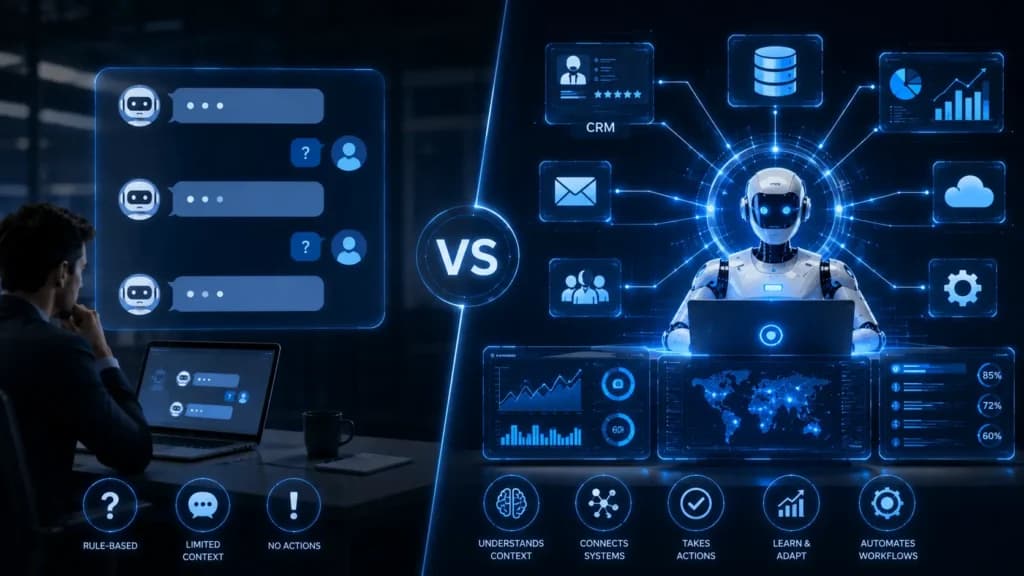
The table below highlights the key differences between traditional chatbots and modern AI agents.
| Feature | Traditional Chatbots | AI Agents |
|---|---|---|
| Primary Purpose | Answer predefined questions | Complete business objectives |
| Intelligence | Rule-based or keyword-based | AI-powered reasoning and decision-making |
| Context Awareness | Limited | High |
| Memory | Usually none | Maintains conversation and workflow context |
| Multi-Step Tasks | No | Yes |
| Business Integrations | Basic | CRM, ERP, databases, APIs, cloud platforms, email, and more |
| Decision Making | No | Yes |
| Workflow Automation | Limited | End-to-end automation |
| Learning Ability | Minimal | Continuously improves with AI models and business data |
| Best For | FAQs and simple customer support | Business process automation and enterprise operations |
The biggest difference is that chatbots respond to requests, while AI agents can independently complete tasks from start to finish.
Real-World Business Examples
Customer Support
Traditional Chatbot
A customer asks about a delayed order.
The chatbot checks a predefined FAQ and replies with a generic shipping policy.
An AI agent:
- Verifies the customer
- Retrieves the order
- Checks shipment status
- Identifies the delay
- Creates a support ticket if required
- Sends a proactive update
- Offers compensation if company policy allows
The issue gets resolved without requiring manual intervention.
Sales Operations
Instead of simply collecting contact information, an AI agent can:
- Research a prospect
- Score the lead
- Recommend products
- Schedule a meeting
- Update the CRM
- Notify the sales team
- Send follow-up emails
This creates a smoother experience for both customers and sales representatives.
Human Resources
Modern HR departments are using AI agents to automate repetitive administrative tasks.
Examples include:
- Resume screening
- Candidate communication
- Interview scheduling
- Employee onboarding
- Policy assistance
- Training recommendations
- Performance review reminders
Instead of replacing HR professionals, AI agents allow them to focus on strategic work.
Finance
Finance teams use AI agents for:
- Invoice processing
- Expense verification
- Financial reporting
- Budget forecasting
- Fraud detection
- Compliance monitoring
This reduces manual effort while improving accuracy.
Benefits of Custom AI Agents

Every organization has unique workflows, software systems, and operational requirements.
That’s why many businesses prefer Custom AI Agents instead of off-the-shelf automation tools.
Custom AI agents can be designed around your business processes, integrate with existing software, and scale as your organization grows.
Some of the biggest advantages include:
Higher Productivity
Employees spend less time on repetitive work and more time on high-value activities.
Faster Decision-Making
AI agents analyze information in real time and provide actionable insights.
Better Customer Experiences
Customers receive faster, more personalized support with fewer delays.
Reduced Operational Costs
Automation lowers manual workloads and improves resource utilization.
Improved Accuracy
AI agents minimize human error by following consistent workflows and validating data automatically.
Scalability
Unlike human teams, AI agents can handle thousands of simultaneous tasks without compromising performance.
When Should You Use a Chatbot?
Traditional chatbots are still a good choice for businesses that need:
- FAQ automation
- Appointment booking
- Basic customer support
- Lead capture forms
- Small business websites
- Simple conversational interfaces
If your requirements are straightforward and involve limited workflows, a chatbot can be a cost-effective solution.
When Should You Choose AI Agents?
AI agents are ideal when your business needs to:
- Automate repetitive workflows
- Connect multiple software platforms
- Improve employee productivity
- Deliver personalized customer experiences
- Analyze business data
- Perform multi-step tasks
- Make intelligent decisions
- Scale operations efficiently
Organizations undergoing digital transformation often gain significantly more value from AI agents than from traditional chatbots.
Why Work with an AI Agent Development Company?
Building an effective AI agent requires much more than integrating a language model into a chatbot interface.
An experienced AI Agent Development Company helps businesses:
- Identify high-impact automation opportunities
- Design intelligent workflows
- Integrate AI with CRM, ERP, and business systems
- Develop secure and scalable AI solutions
- Train AI models using business-specific knowledge
- Ensure compliance, monitoring, and ongoing optimization
Choosing the right development partner ensures that your AI solution delivers measurable business outcomes rather than simply providing conversational responses.
The Rise of Autonomous AI Agents
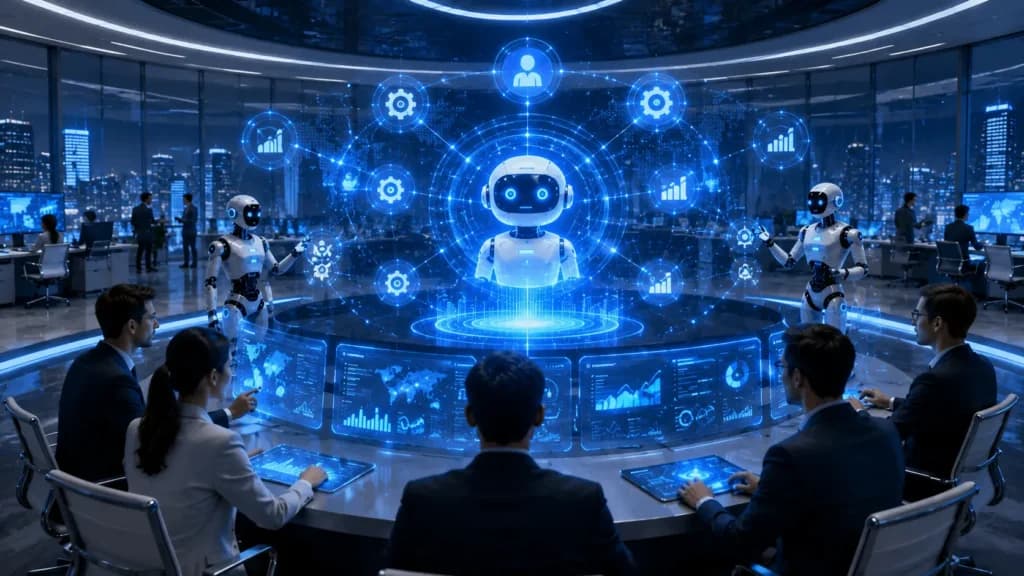
One of the biggest technology trends in 2026 is the adoption of Autonomous AI Agents.
Unlike traditional automation tools, autonomous agents can:
- Plan tasks independently
- Prioritize work
- Collaborate with other AI systems
- Adapt to changing business conditions
- Execute workflows with minimal supervision
In the near future, businesses will rely on networks of autonomous AI agents working together across departments such as sales, finance, HR, operations, and customer support.
This shift represents a major evolution in enterprise automation.
Final Thoughts
Traditional chatbots transformed customer support by making businesses available around the clock. However, the demands of modern organizations have outgrown what rule-based conversational systems can offer.
AI agents represent the next stage of business automation. They don’t just answer questions—they understand goals, make informed decisions, integrate with enterprise software, and execute complete workflows.
For businesses looking to improve efficiency, reduce operational costs, and deliver exceptional customer experiences, investing in Custom AI Agents is no longer just an innovation—it has become a competitive advantage.
Whether you’re exploring AI for customer support, internal operations, sales automation, or enterprise workflow management, partnering with an experienced AI Agent Development Company can help you build intelligent solutions tailored to your business needs.
As AI continues to evolve, Autonomous AI Agents will play an increasingly important role in helping organizations operate faster, smarter, and more efficiently than ever before.
Frequently Asked Questions (FAQ)
Traditional chatbots are designed to answer predefined questions using scripted logic, while AI agents can understand context, make decisions, and complete multi-step business tasks across different systems.
It depends on your business goals. Chatbots work well for FAQs and simple customer interactions. AI agents are better suited for workflow automation, business operations, and complex decision-making.
Custom AI Agents are intelligent software solutions built specifically for a company’s unique business processes. They integrate with existing systems and automate tasks based on organizational requirements.
Autonomous AI Agents are advanced AI systems capable of planning, reasoning, and executing tasks with minimal human intervention. They can coordinate workflows, interact with business applications, and continuously adapt to changing conditions.
Healthcare, finance, retail, logistics, manufacturing, SaaS, real estate, education, and professional services are among the industries seeing significant improvements through AI agent adoption.
Yes. Modern AI agents can integrate with popular CRM, ERP, cloud databases, communication platforms, and other enterprise applications to automate workflows and improve operational efficiency.
If your business relies on repetitive processes, multiple software platforms, manual approvals, or high customer interaction volumes, AI agents can help improve productivity, reduce costs, and enhance customer experiences.
Conclusion
Businesses no longer need to choose between automation and personalization. AI agents deliver both. By combining intelligent decision-making with seamless workflow execution, they help organizations move beyond basic chatbots and toward truly autonomous operations.
Companies that begin investing in AI agent technology today will be better positioned to scale efficiently, innovate faster, and stay ahead in an increasingly AI-driven marketplace.